.png)
Stories, Impact and Community: Reflections from SHÉLA’s Launch

Updated: Sep 9
What Makes a Group of People a Community?
It’s easy to focus on measurable metrics. We often look at how many people attended an event, their demographics, or how long they stayed. However, numbers alone do not tell the full story. They do not reveal whether individuals felt safe sharing parts of themselves. They do not show if someone identified with another's story or left feeling more connected than when they arrived. These are the deeper metrics that often serve as the foundation for true community.
A Memorable Launch Event
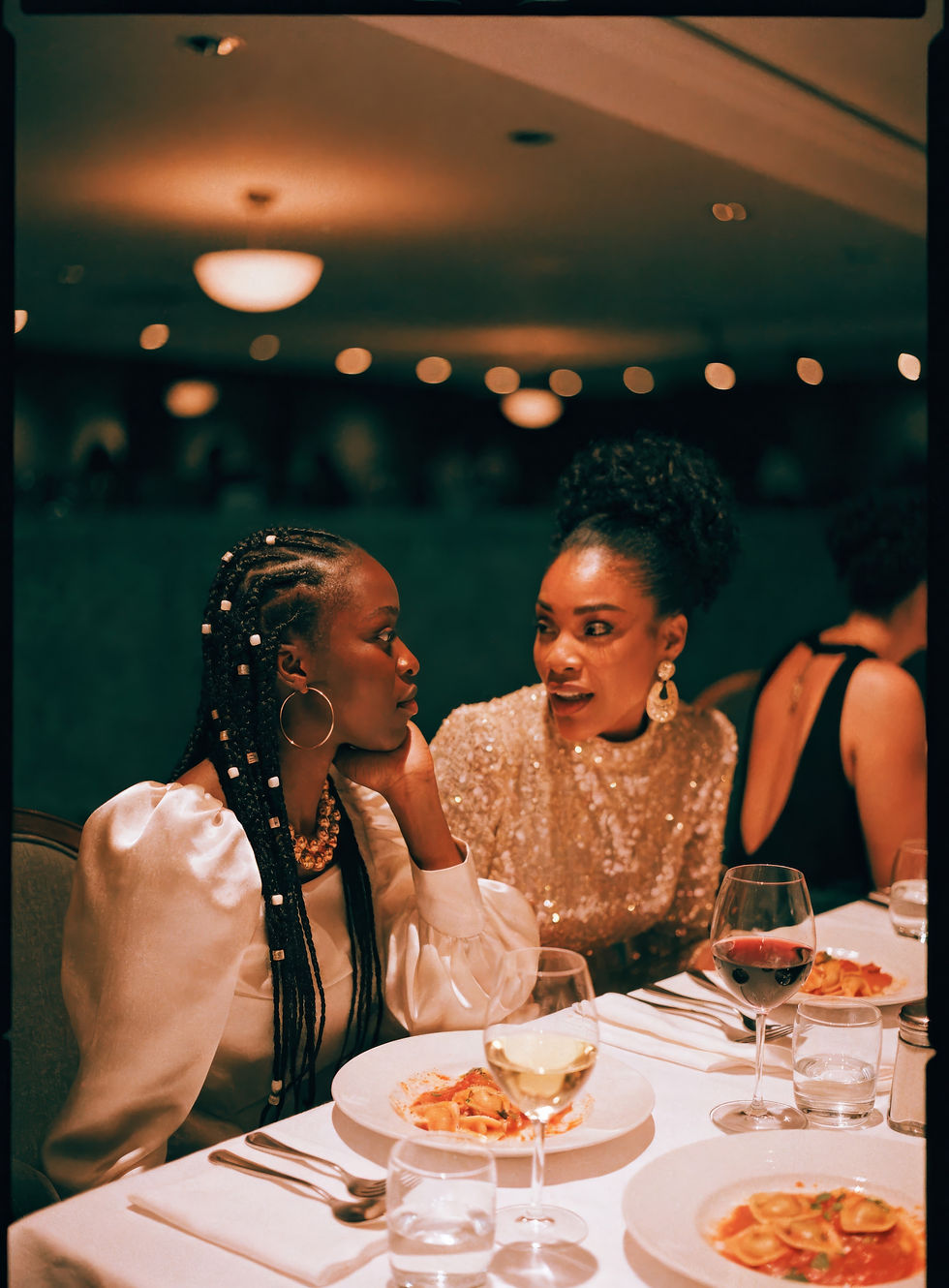
Last Saturday, August 15th, 2026, we gathered queer women from seven countries for SHÉLA’s launch. Through music, humour, personal stories, and group conversations, we created a space for connection. As the evening unfolded, it became clear that authentic storytelling serves as a channel for self-recognition and, by extension, a powerful community-building mechanism.
The evening began with Cameroonian artist Cindy Mbamalu sharing one of her earliest memories of music. For Cindy, music has always been communal. It played in the background of her childhood, with her mother and grandmother naturally making room for it. Joining us from London, she performed a traditional song rooted in her culture. This reminded us that music carries memory, identity, and belonging across generations.
The Power of Storytelling
Stories continued to shape the gathering. Praj spoke about turning real-life experiences into humour. Later, a conversation about falling in love online led a guest to share how she met her partner on Bumble. Although currently long-distance, she described feeling deeply fulfilled in the relationship. She reflected on how distance had enhanced their communication skills, presence, and intentionality.
As a community, our lives may differ in many details, but stories provide a shared point of convergence. They help us move beyond the abstract and truly see the human behind the screen or in front of us. Sometimes, someone you have just met can leave you marveling at the interconnected nature of our existence.
Community Beyond Scheduled Gatherings
SHÉLA was not founded simply to add another queer community to the map. It emerged from lived experiences and a clear need for spaces where queer women can be truly heard, supported, and centred.
Our work begins with listening as a tool for healing, presence, and connection. We are creating room for lesbians to speak openly about safety, family, migration, religion, health, and belonging, knowing they will be heard and supported.
That principle guided the design of our launch. We wanted people to experience community in action, and the breakout rooms proved to be the perfect opportunity. We understand that a large room can sometimes make people take on the role of observers. A smaller room, on the other hand, encourages us to engage more deeply. Suddenly, we find ourselves more open to voicing our thoughts and feelings.
For many attendees of the launch, and members of our team, those small-group conversations became the highlight of the evening. This reinforces our commitment to protect the space between observer and participant at SHÉLA, creating more intimate circles for us, by us.

What Does Impact Look Like at the Beginning?
Impact starts as a seed—small at first, but quickly compounding when nurtured. We laughed, engaged in conversations that lingered, and received positive feedback.
“I really love that this platform has been created for queer women, and I hope that it stays forever! I’m totally looking forward to the SHÉLA Circle.”
For now, this is all that matters, and that is enough.
At this stage, impact looks like someone discovering a conversation they didn’t know they needed. It looks like someone feeling safe enough to share a story about love, culture, or self-acceptance. It looks like people leaving with a genuine desire to return. We are here for the many faces and phases of the impact we can (and will) make together.
Ultimately, the launch showed us that connection can begin through a screen and be maintained through something we genuinely feel.
Moving Forward Together
As we reflect on our journey, we recognise that every story shared, every laugh exchanged, and every connection made contributes to a larger tapestry of community. We are committed to nurturing this space where every voice matters.
Our mission is to create a platform where stories are celebrated and identities are valued. We envision a world where every queer woman feels seen, heard, and cherished. Together, we will continue to build this community, fostering connections that transcend borders and cultures.
We invite you to join us on this journey. Let’s create a world where our stories are not just told but celebrated. Together, we can make SHÉLA a leading global platform for lesbians, where our identities and stories are visible, valued, and celebrated across all cultures and generations.
Written by Susan N


Comments